 Helbonita
 How to Read an Ingredient List (and Why "Half a Teaspoon of Sugar" Can Be a Lot More)
Episode 1 of "Flip the Label": why ingredient order is basically the law, four ways manufacturers hide sugar in the list, and a live breakdown of Telma cornflakes vs. Yotvata dairy products.
July 6, 2026 · Yair Nisimov and Yifat Shuster
“Flip the Label” is a new podcast by Yair Nisimov and Yifat Shuster — a non-expert couple curious enough to dig into the world of nutrition and fitness, one topic at a time. In every episode, one of us takes on a research project about a specific subject, and comes back with the answers, the mistakes, and the insights gathered along the way.
In the first episode we open with a fun disclaimer: we’re not dietitians or nutritionists, just a couple who got sick of being fooled at the supermarket. We set out to investigate one thing we all tend to skip — the ingredient list on the back of the food package — and why a certain “protein” snack is actually candy in disguise, and how food companies use polished words to hide that fact.
How to Read a Food Label
In Israel, the Public Health Protection (Nutritional Labeling) Regulations require every packaged food product to display a fixed table with calorie count, fat, sodium, carbohydrates, dietary fiber, and protein — always in the same order. Important to know: the ingredient list is displayed in descending order by quantity, so the first ingredient on the list is always the most dominant ingredient in the product.
Sugar Has Many Names
One of the most common tricks food manufacturers use is splitting sugar into several different names, so each one appears lower down on the ingredient list — even if, all together, it adds up to a large amount of sugar. We came across a few families worth learning to recognize:
- Names ending in “-ose” — the scientific sugars — sucrose (regular household white sugar), glucose (grape sugar), fructose (fruit sugar that sounds healthy but is highly processed in large amounts), lactose (milk sugar), maltose (malt sugar), and dextrose. These are, for all practical purposes, simple sugars or disaccharides, even if extracted from a natural source.
- The syrup family — the most common trap — high-fructose corn syrup (HFCS, very common in snacks and soft drinks), glucose syrup, malt syrup, agave syrup (marketed as “natural” but very concentrated in sugar), brown rice syrup (common in health bars and granola), and maple syrup (natural, but still sugar on the nutritional scale). These are concentrated, sugar-rich liquids that are cheap to produce and improve texture.
- Names that “sound” healthy or natural — silan/date concentrate (healthier than white sugar thanks to minerals, but still spikes blood sugar), honey, fruit juice concentrate (like “apple juice concentrate” — companies write “no added sugar” but sweeten with concentrate, which is simply fruit sugar without the fiber), cane/brown/coconut sugar, and molasses. This is where consumers fall for it most, because the words connect in our minds to health, but the effect on blood sugar is similar.
- Industrial and complex names — maltodextrin (a processed carbohydrate with a very high glycemic index, usually used as a thickener and sweetener), invert sugar, and modified starch, which usually break down very quickly into sugar in the body.
The Red and Green Labels
Since 2020, Israel has had a color-coded labeling reform: a mandatory red label appears when a product crosses a certain threshold of sodium, saturated fat, or sugar, and a voluntary green label is meant for products considered more recommended. It’s a quick tool for an initial assessment, but it doesn’t replace reading the full nutrition facts table.
The 100-Gram Trap, and a Live Breakdown of Telma Cornflakes
One of the myths we busted in the episode: the nutrition facts on a package are usually shown per 100g, but the actual serving size can be completely different — for example, thin pastrami, where 100g is actually an entire pack. It’s always important to compare products by the exact same quantity, and not rely on the big number printed at the top.
In the episode we did exactly that, with Telma’s “Fitness Classic” breakfast cereal: 381 calories per 100g (80g carbs, of which 9.9g sugars, 7.9g protein, 2.3g fat, and 400mg sodium), but only about 114 calories for a real serving size of 30g, with only about ¾ teaspoon of sugar per serving. The ingredient list includes whole wheat (61.1%), rice, sugar, fructo-oligosaccharides, invert sugar syrup, minerals, malt extract, vegetable oil, salt and molasses, flavorings, antioxidants, and various B vitamins.
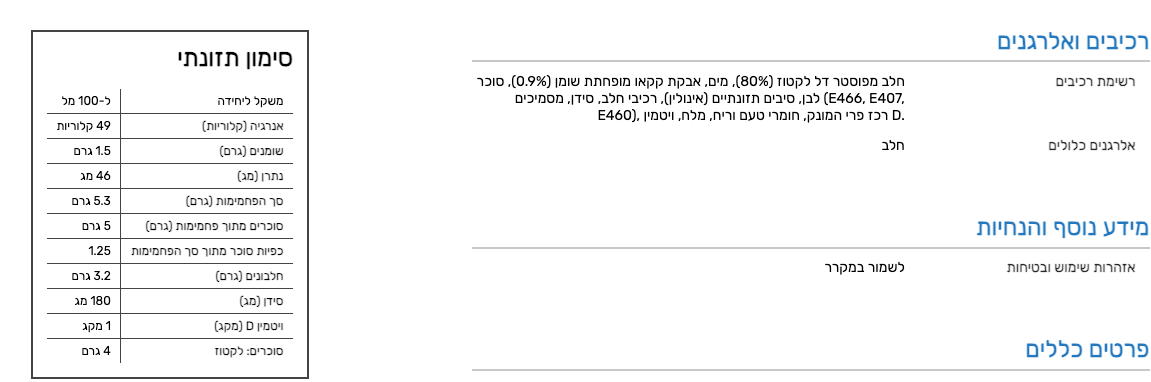
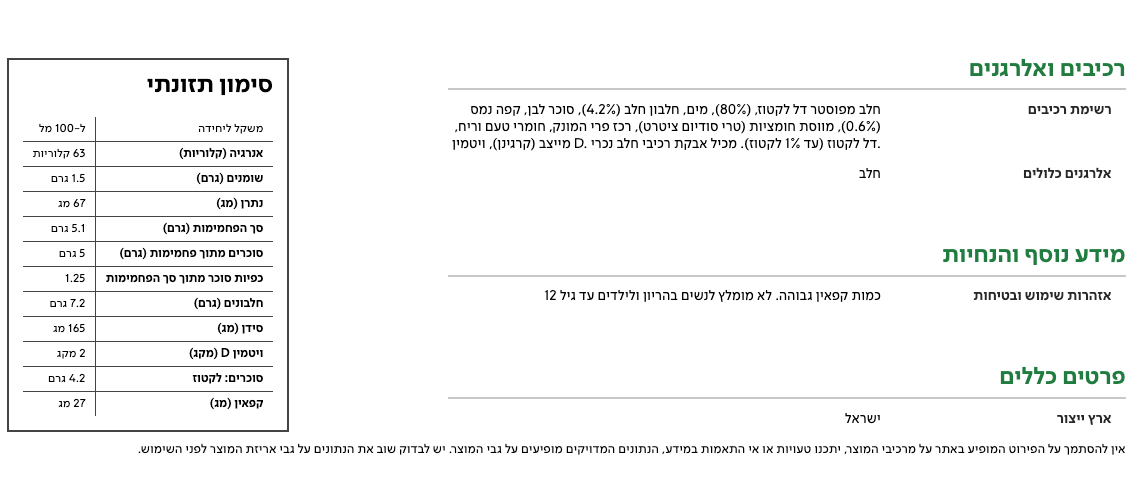
Then we compared two Yotvata dairy products with a similar calorie count — and the result surprised even us: a 1:1 ratio between two products can be 157 calories with 18g of protein versus 126 calories with only 14.4g of protein. Roughly the same calorie count, but a completely different nutritional picture.
Summary and Action Items
From today on, don’t look at the ad on the front — flip the package right over and look at the ingredients on the back. Three simple rules of thumb for your next supermarket trip: check what the first ingredient on the list is, watch out for all the different names for sugar, and compare products by the exact same serving size.
We’d love to hear from you — write to us on Instagram or Spotify about which product surprised you the most when you flipped it over to check the ingredients.